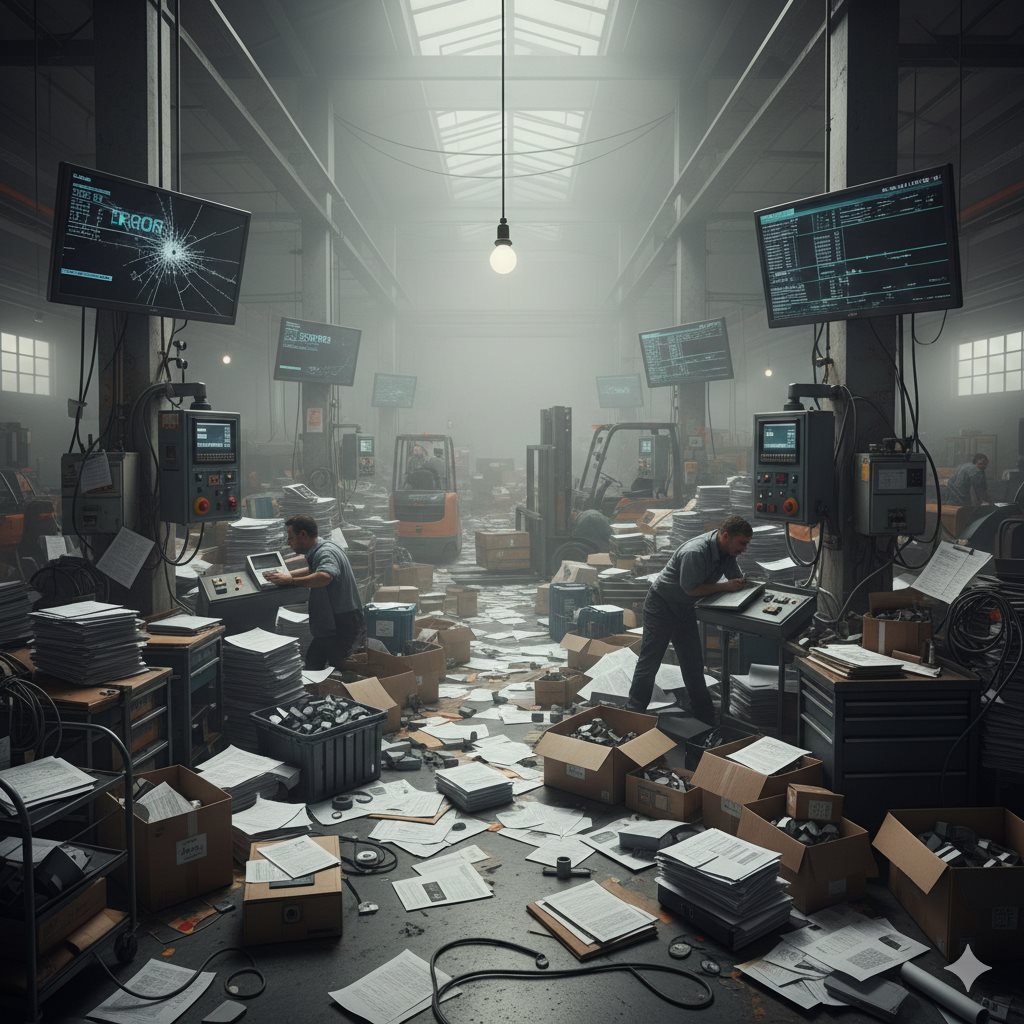
5 Signs Your Factory Needs Better Production Execution
Every manufacturer wants to be efficient. But as a company grows, the simple spreadsheets and whiteboards that worked in the beginning start to break down. Chaos creeps in. Deadlines are missed. Quality slips.
How do you know when you've outgrown your current processes? Here are 5 clear signs that your factory is suffering from an "Execution Gap" and needs a dedicated Manufacturing Execution System (MES).
1. You Don't Know the Status of an Order Without Walking to the Floor
The Symptom: A customer calls asking, "Where is my order?" You can't answer immediately. You have to put them on hold, call the supervisor, or physically walk out to the shop floor to hunt down the job.
The Reality: If you lack real-time visibility into Work-In-Process (WIP), you are flying blind. You cannot proactively manage customer expectations or expedite urgent jobs efficiently.
The Solution: An MES tracks every order in real-time. You can see exactly which machine it's on, how many parts are done, and the estimated completion time—all from your desk.
2. Your Production Schedule is "Dead" the Moment It's Printed
The Symptom: You spend hours creating a perfect production schedule in Excel. You print it out and hand it to the floor. An hour later, a machine breaks down, or a material is missing. The paper schedule is now trash, and the floor is running on ad-hoc decisions.
The Reality: Manufacturing is dynamic. Static paper schedules cannot adapt to real-world constraints. This leads to poor machine utilization and operators cherry-picking "easy" jobs instead of following priority.
The Solution: Digital scheduling in an MES is dynamic. If a machine goes down, the schedule updates. Operators always see the current "Next Job" based on real-time priority and constraints.
3. You Find Out About Scrap/Defects After the Batch is Finished
The Symptom: A production run finishes, and you discover that 10% of the parts are out of spec. Or worse, the customer finds the defect.
The Reality: "Post-mortem" quality control is too late. You've already wasted materials, machine time, and labor on bad parts.
The Solution: In-process quality control. An MES can force operators to perform checks at specific intervals. If a measurement drifts, the system can stop the machine immediately, preventing a pile of scrap.
4. You Rely on "Tribal Knowledge"
The Symptom: "Only Bob knows how to run that machine." If Bob calls in sick, production on that line halts or quality plummets.
The Reality: Relying on memory or verbal instructions is a recipe for inconsistency. It makes training new employees a nightmare and creates single points of failure.
The Solution: Digital work instructions. An MES displays step-by-step guides, diagrams, and videos at the operator terminal. This standardizes the process, ensuring that any trained operator can run the job correctly.
5. You Spend Days Preparing for Audits
The Symptom: An auditor is coming. The entire engineering and quality team spends a week digging through filing cabinets, scanning paper travelers, and cross-referencing spreadsheets to prove traceability.
The Reality: Manual traceability is expensive and risky. If you lose a paper record, you fail the audit.
The Solution: One-click traceability. An MES records everything automatically. You can type in a serial number and instantly generate a report showing every material, operator, machine, and test result associated with that product.
Conclusion
If any of these signs sound familiar, your factory is ready for the next level. Implementing a Manufacturing Execution System isn't just about software; it's about regaining control. It's about moving from "fighting fires" to optimizing performance.